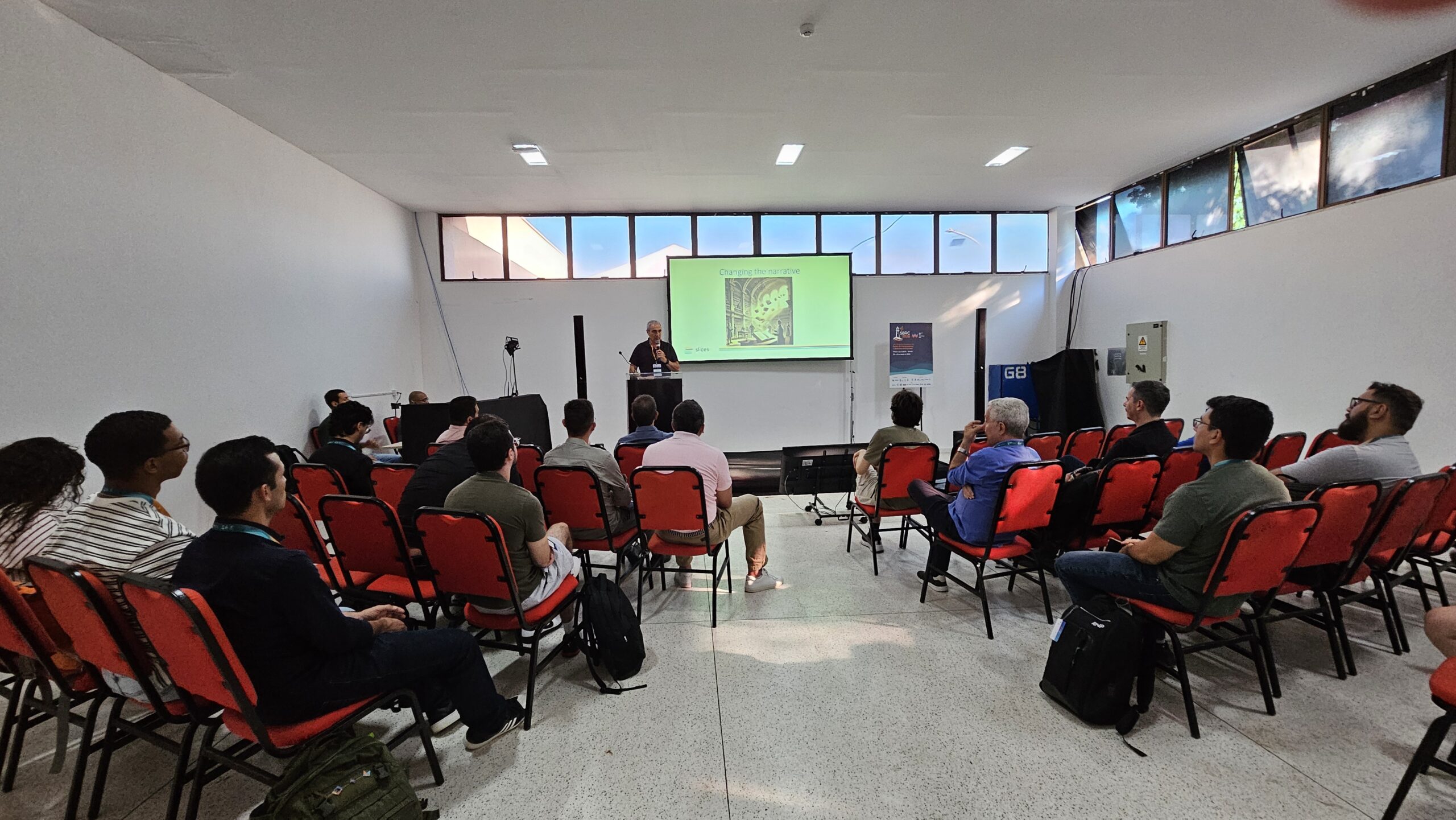
SMARTNESS played a highly relevant role at the Brazilian Symposium on Computer Networks and Distributed Systems (SBRC) 2026, the leading Brazilian scientific event in the fields of computer networks, telecommunications, distributed systems, and advanced digital technologies. Held from May 25 to 29, 2026, at the Praia do Forte Convention Center in Bahia, the event brought together researchers, students, industry professionals, and research institutions from different regions of Brazil and abroad to discuss the latest advances in connectivity, artificial intelligence, cybersecurity, distributed computing, mobile networks, cloud computing, and emerging technologies.
Throughout the symposium, researchers affiliated with SMARTNESS actively participated in the main technical track, the Tools Session, scientific workshops, and academic organization activities, presenting research aligned with current technological challenges related to intelligent networks, artificial intelligence applied to communication infrastructure, network security, distributed learning, programmable networks, 5G mobile networks, and quantum computing.
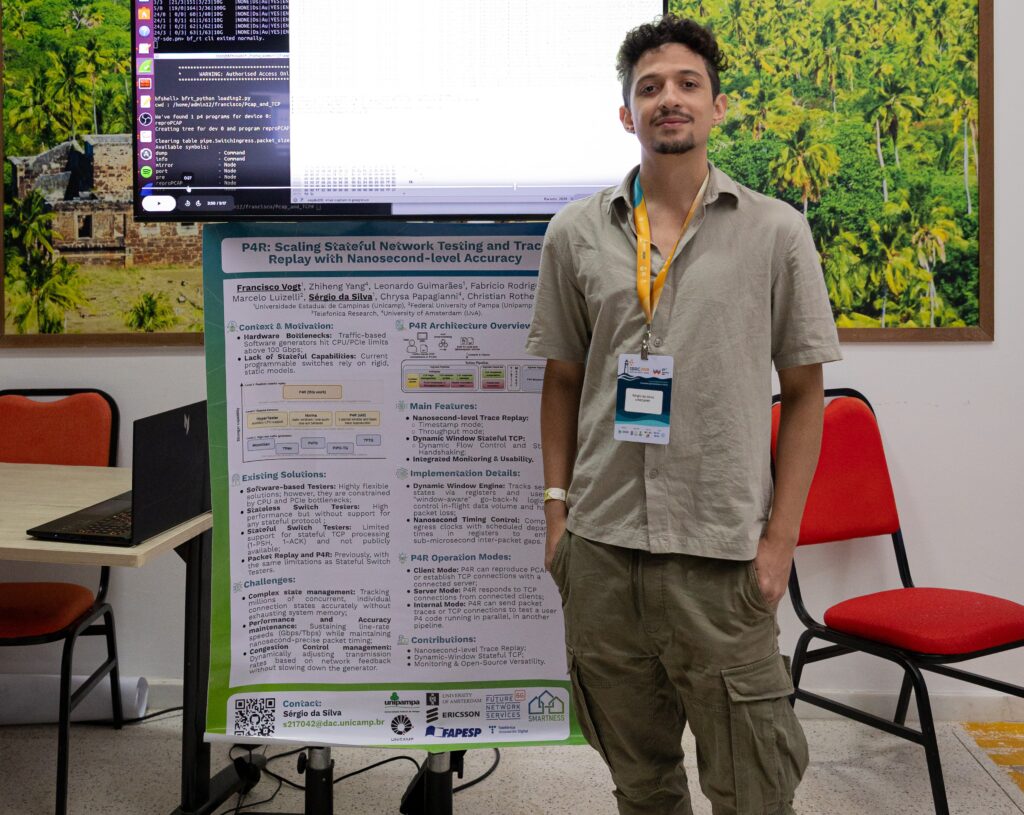
In the Tools Session, researcher Sérgio Rossi Brito da Silva presented the work “P4R: Stateful Network Test Scheduling and Traffic Replay with Nanosecond Precision” The research introduced an evolution of the P4R (P4 Replay) framework, an open-source tool focused on experimentation in high-speed networks using programmable ASICs. The system enables faithful replay of real traffic with nanosecond-level temporal precision, contributing to realistic experimentation in modern networks and large-scale infrastructures.
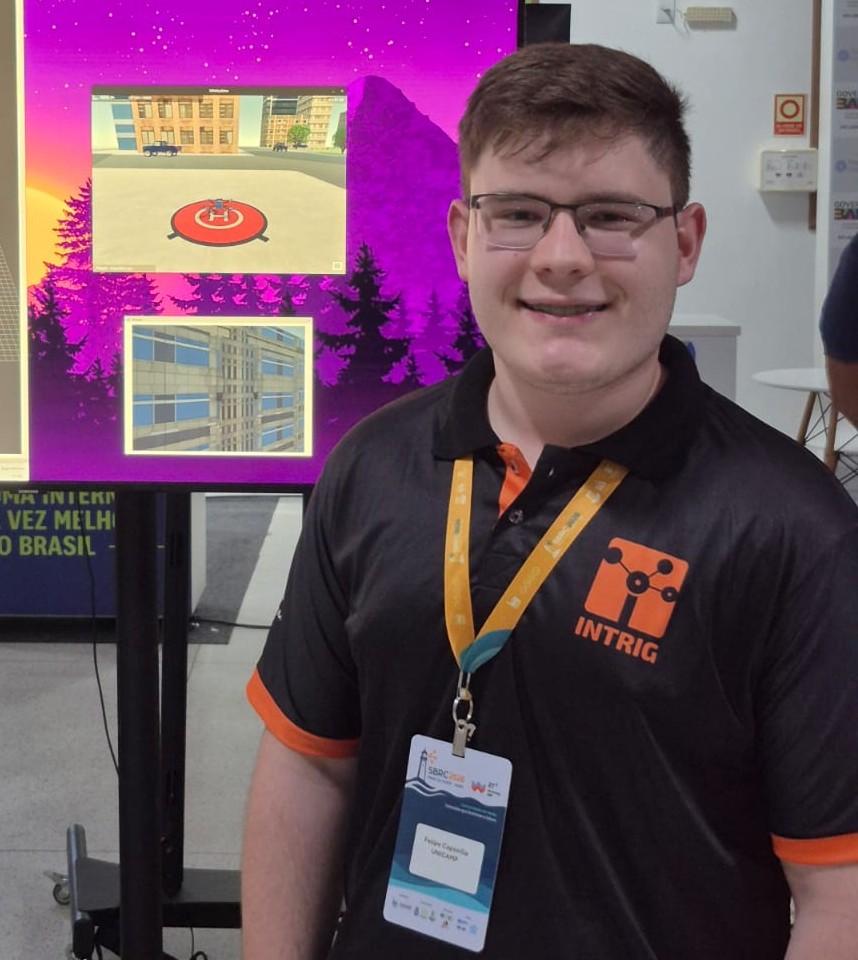
Also in the Tools Session, researcher Felipe Pavanello Capovilla presented the demonstration “UNetyEmuROS: A Multi-Vehicle Unity-Based Simulator with Physically Grounded Dynamics and ROS2 Sensor Integration” The system extends the UNetyEmu simulator by incorporating an advanced physical dynamics engine with individual motor modeling, cascaded PID control, and modular integration with ROS2 sensors, including LiDAR, RGB and depth cameras, inertial measurement units, and GPS. The work received all artifact evaluation badges awarded by the event, including availability, functionality, sustainability, and experimental reproducibility.
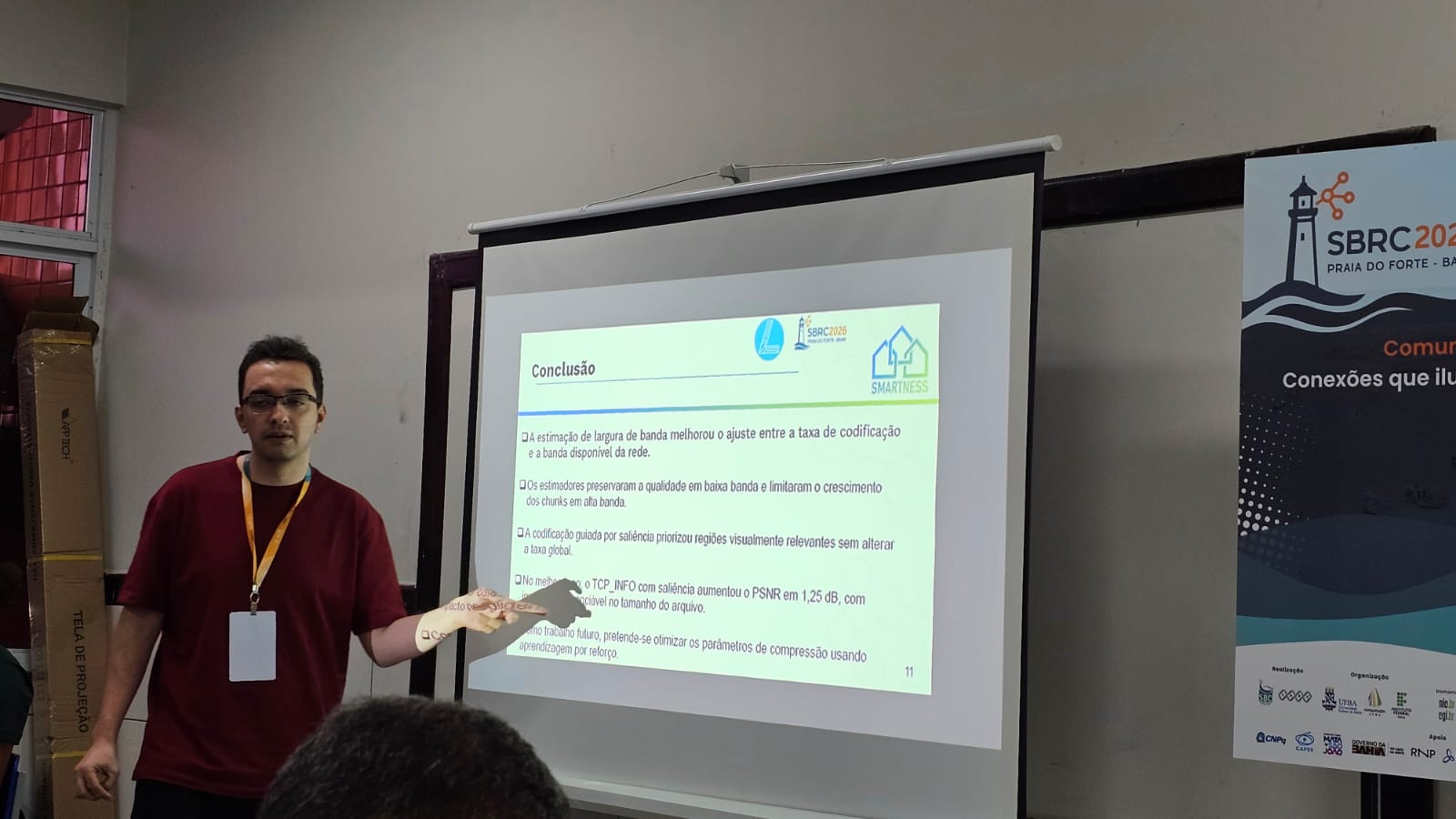
In the symposium’s main track, researcher Públio Elon Correa da Silva presented the paper “Evaluation of Bandwidth Estimators and Their Impact on Real-Time 360º Video Applications” The study investigates bandwidth estimation mechanisms for immersive multimedia applications, especially in real-time 360º video streaming scenarios, contributing to improvements in quality of experience for next-generation multimedia applications.
Also in the main track, researcher Rebeca Dantas Cabral presented the paper “Intento, Therefore I Program: An Agent Layer for Translating Natural Language Commands into Calls to the 5G Core Operations Interface” The research proposes an artificial intelligence agent-based architecture capable of interpreting commands written in natural language and automatically converting them into operations for managing 5G core networks, contributing to the advancement of autonomous networks.
Prof. Cristiano Bonato Both presented the paper “Enforcing Service Stability for WebAssembly Extended Reality Workloads at the Edge: A Quality of Service Aware Orchestration Framework” in the main track of SBRC 2026. The work is the result of the master’s dissertation of Gustavo Spadotto Jardim and research conducted within the DisCoNet – Distributed Computer Networking project at the SMARTNESS Center, reinforcing the group’s commitment to innovation in edge computing, distributed networks, and Extended Reality applications.
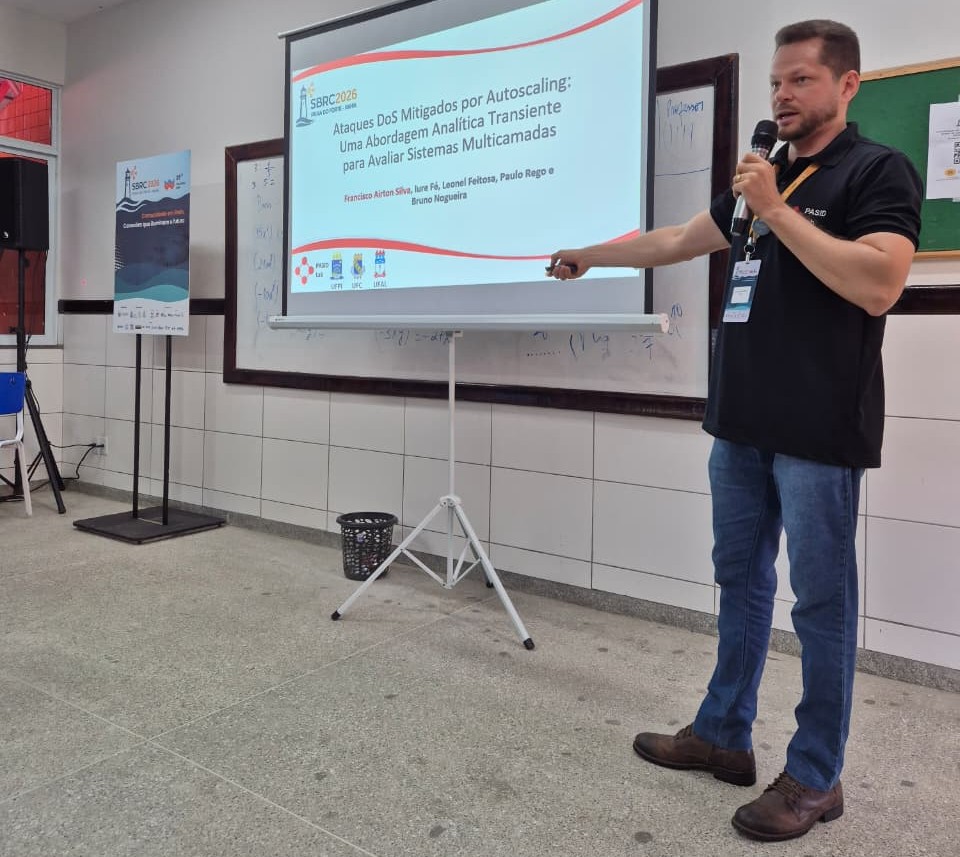
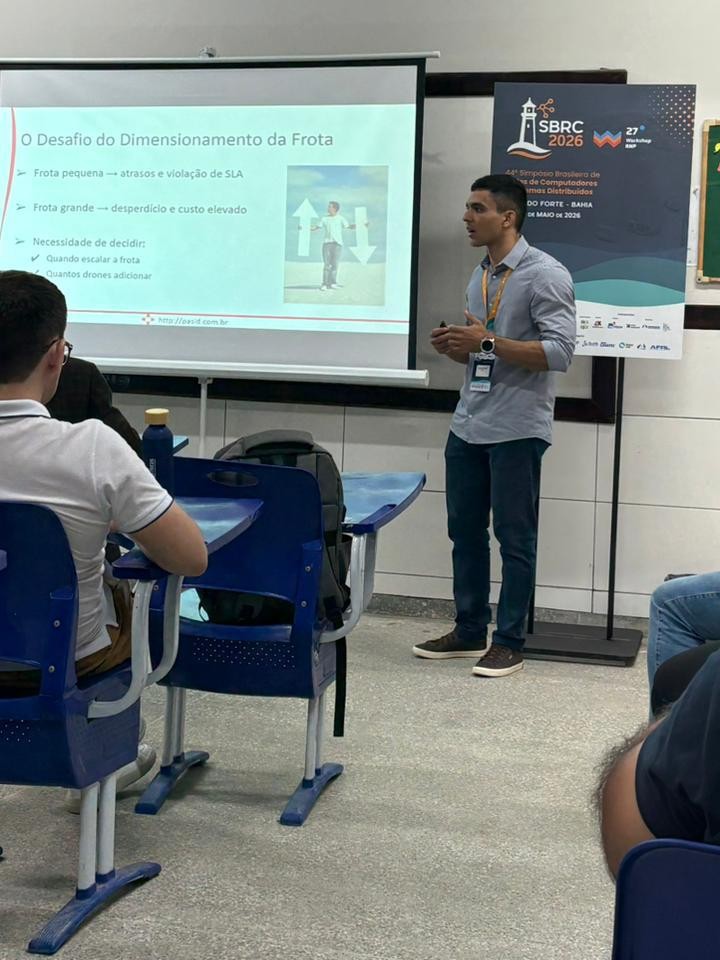
During SBRC, Prof. Francisco Airton presented the paper “DoS Attacks Mitigated by Autoscaling: A Transient Analytical Approach for Evaluating Multilayer Systems” at ST7 – Technical Session 7 – DDoS, held on May 26. The work is directly related to SMARTNESS research activities by addressing the analytical evaluation of DoS attack mitigation mechanisms in multilayer systems using autoscaling strategies. In addition, student José Miqueas presented the related research work “Drones-DT: Dynamic Fleet Management of Drones Represented by Digital Twins”
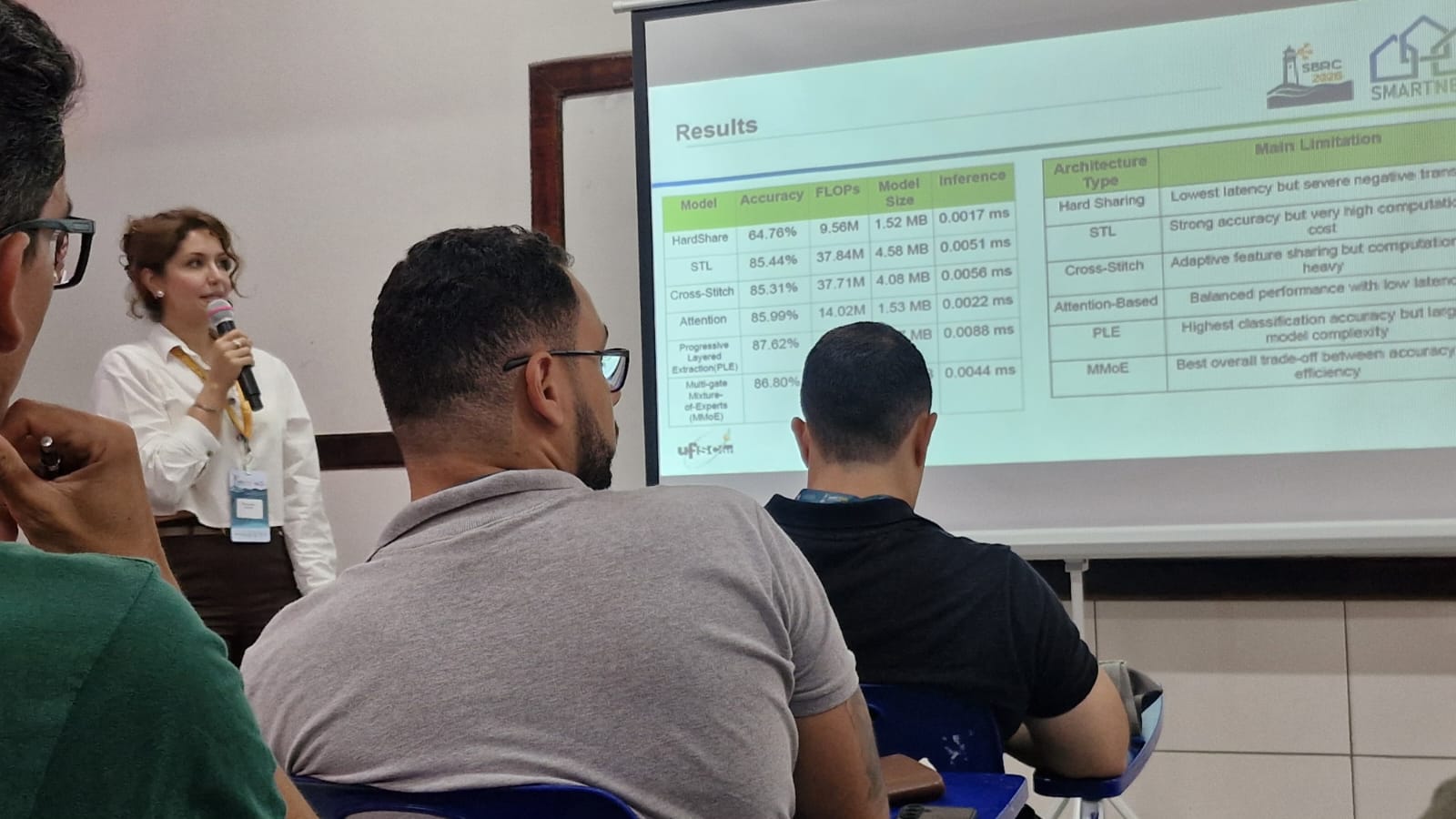
Researcher Mina Kaviani presented the paper “On the Effectiveness of Multitask Learning for 5G Radio Access Network Modeling: A Comparative Study with Single-Task Approaches” The study investigates the use of multitask learning for 5G network modeling, comparing different multitask architectures with traditional approaches in tasks such as performance indicator prediction and interference detection in mobile networks.
Also in the main track, researcher Mateus Carmo de Oliveira presented the paper “LoRA-SL: Low-Rank Adaptation for Continual Learning in Split Learning” The research addresses the problem of catastrophic forgetting in artificial intelligence models continuously trained across multiple tasks, proposing a strategy based on low-rank adaptation integrated into split learning scenarios involving drones and memory-constrained devices.
Researcher Johny Marques presented the paper “An Experimental Framework for Studying Non-Independent and Non-Identically Distributed Data in Federated Learning Applied to Network Telemetry” The study proposes an experimental environment for generating realistic datasets in federated learning scenarios, investigating the impacts caused by heterogeneous data distributions on AI-based network automation.
At the Undergraduate and Scientific Initiation Workshop, researcher Giovanna Luisa Hirata dos Anjos presented the paper “Intrusion Detection in DNS Traffic Using Neural Networks and Explainability Techniques” The research proposes a proactive intrusion detection system capable of identifying threats such as malware, phishing, and spam in DNS traffic using deep neural networks combined with SHAP-based explainability techniques. The work received the Best Paper Award of the workshop, standing out for its scientific quality and the relevance of its results.
In addition to the technical and scientific presentations, SMARTNESS also played an active role in the academic organization of the event. Researcher Antônio Jorge G. Abelém coordinated the Quantum Networking Workshop (WQuNETS 2026), held as a satellite event of SBRC 2026 in partnership with researchers from UFPA, RNP, QUINN/SENAI CIMATEC, and UFRJ. The workshop brought together researchers, students, and professionals interested in quantum communication, quantum networks, distributed quantum computing, and quantum security, strengthening the national research ecosystem in quantum technologies.
SMARTNESS 2030’s significant participation at SBRC 2026 demonstrates the consolidation of the project as an environment of scientific and technological excellence focused on developing innovative solutions in intelligent networks, applied artificial intelligence, cybersecurity, distributed learning, and advanced communication systems. The works presented reflect not only the thematic diversity and quality of the research conducted, but also the group’s ongoing commitment to training highly qualified human resources, producing impactful scientific results, and advancing technologies aligned with the challenges of digital transformation and future intelligent communication infrastructures.