With the deployment of 5G and the 6G vision being developed, the main challenges for SMARTNESS are how to design and operate cloud computing infrastructures and networks with adequate capabilities to leverage the next generation of Internet services and applications. The scope of end-to-end services at the Internet scale is exceptionally broad and requires contributions across multiple disciplines along with large investments in capital and human resources.
SMARTNESS aims to explore well-planned opportunities through an appropriate methodology based on the confluence of Research Strands (RS) designed to successfully impact world-class research and innovation through Scientific and Technological Advancements (STA) to address challenging use cases in Internet scenarios for industry and society with a vision on the horizon for the year 2030.


In June 2023, Carlos Rony Recalde successfully defended his master's dissertation titled “Edge Data Plane Programmability for Robotic Control Application Latency Improvements”, under the guidance of Professor Christian Esteve Rothenberg.
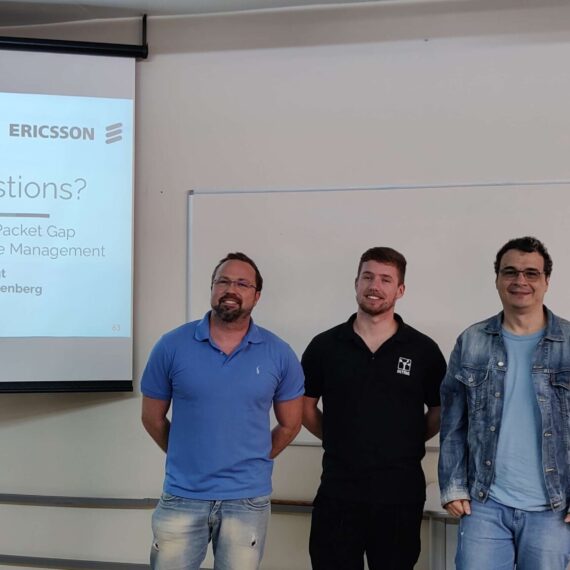
In June 2023, Francisco Germano Vogt successfully defended his master's dissertation titled “In-band Telemetry using Inter-packet Gap Metrics for Network and Service Metrics Management”, under the guidance of Professor Christian Esteve Rothenberg.
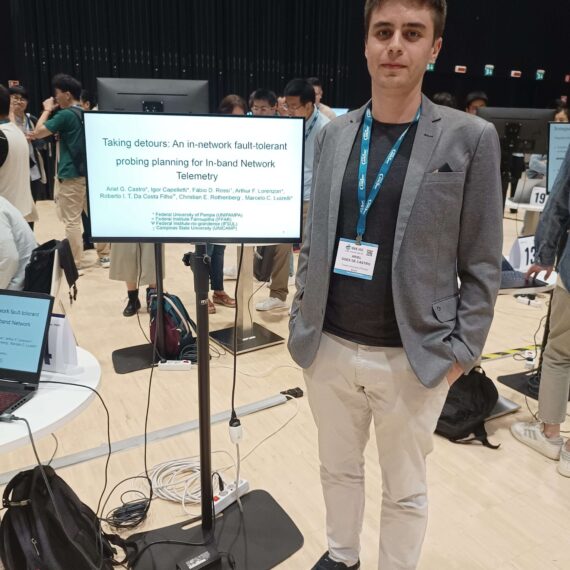
Ariel Góes represented the INTRIG group at the IEEE ICC 2023, presenting "Taking detours: An in-network fault-tolerant probing planning for In-band Network Telemetry" in the context of sustainable communications.
© 2024 SMARTNESS 2030