

With the deployment of 5G and the 6G vision being developed, the main challenges for SMARTNESS are how to design and operate cloud computing infrastructures and networks with adequate capabilities to leverage the next generation of Internet services and applications. The scope of end-to-end services at the Internet scale is exceptionally broad and requires contributions across multiple disciplines along with large investments in capital and human resources.
SMARTNESS aims to explore well-planned opportunities through an appropriate methodology based on the confluence of Research Strands (RS) designed to successfully impact world-class research and innovation through Scientific and Technological Advancements (STA) to address challenging use cases in Internet scenarios for industry and society with a vision on the horizon for the year 2030.





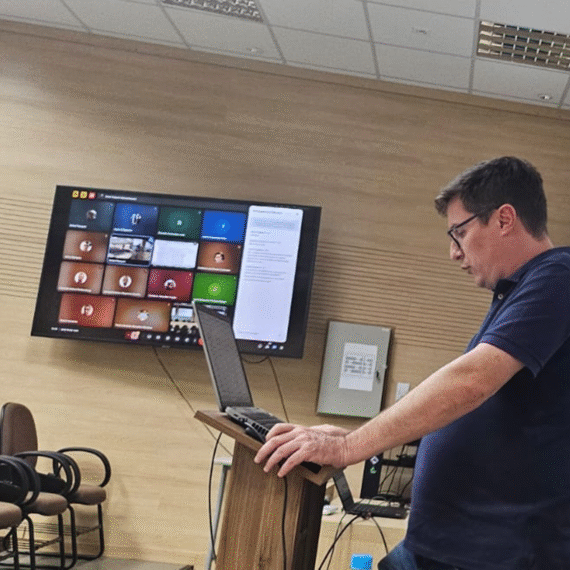
On April 22 and 23, the SMARTNESS Year 02 Bootcamp brought together participants in a hybrid format — online and on-site at UNICAMP — for practical sessions focused on networking technologies, AI/ML, and modern computing tools.
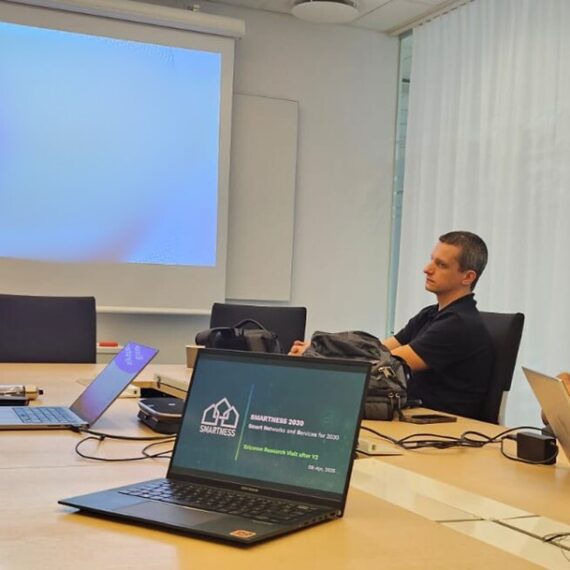
From April 7 to 11th, representatives of CPE Smartness visited Ericsson's headquarters in Stockholm to participate in a schedule of technical activities, knowledge exchange, and in-person discussions about the project's progress. The visit included Professors Christian Rothenberg and Luiz Bittencourt (Unicamp), Fábio Verdi (UFSCar), and researcher Maria Valéria Marquezini Miranda (Ericsson Research Brazil). The team carried out several meetings with researchers from Ericsson Research, covering topics such as Networks, Artificial Intelligence, Computing, and Software. The agenda also included meetings with Smartness project stakeholders and a visit to the Ericsson Imagine Studio.
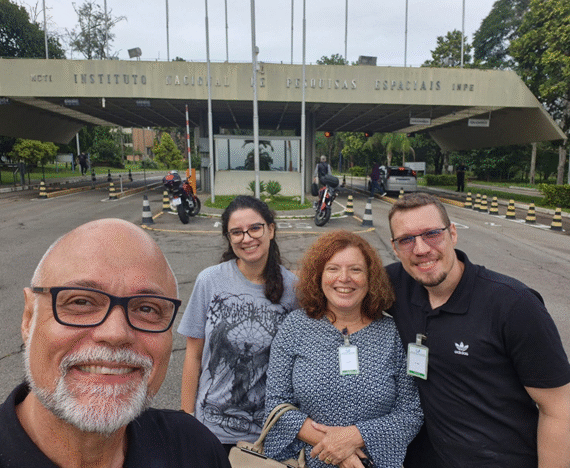
On April 16, Eduardo Sartori (TT/SMARTNESS) and LEMAC researchers visited INPE (São José dos Campos) to learn about a system for measuring electromagnetic parameters of materials in the microwave range. The visit included tests on materials used in metasurface research and supported the planning of a similar system at LEMAC, with extended capabilities up to 500GHz.
Ervin Alain Bolivar Huayhua, Eric Rohmer, Felipe Augusto Oliveira Mota, César Bastos da Silva, and Breno Miranda Portela, “Enhancing Assistive Home Environments through IoRT Multi-Agent Interaction: Model Selection and Robotic Operations”, in 10th Congress of the Brazilian Institute of Neuroscience and Neurotechnology (BRAINN), 2024.