

With the deployment of 5G and the 6G vision being developed, the main challenges for SMARTNESS are how to design and operate cloud computing infrastructures and networks with adequate capabilities to leverage the next generation of Internet services and applications. The scope of end-to-end services at the Internet scale is exceptionally broad and requires contributions across multiple disciplines along with large investments in capital and human resources.
SMARTNESS aims to explore well-planned opportunities through an appropriate methodology based on the confluence of Research Strands (RS) designed to successfully impact world-class research and innovation through Scientific and Technological Advancements (STA) to address challenging use cases in Internet scenarios for industry and society with a vision on the horizon for the year 2030.





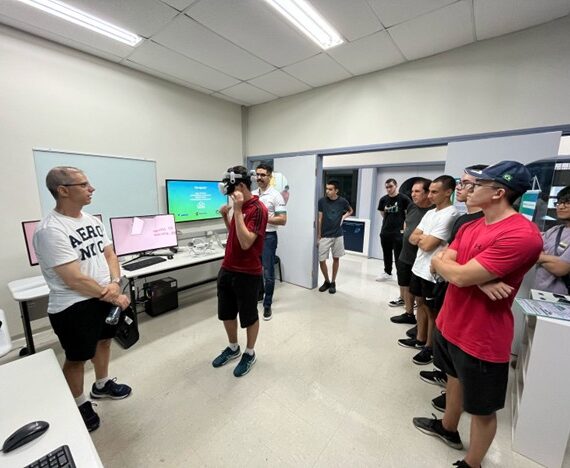
On February 22, the School of Electrical Engineering and Computer Science (FEEC) hosted "Encontro FEEC," welcoming new students and the public to explore cutting-edge research. Highlights included SMARTNESS researchers showcasing innovations at the LCA, AdRoLab's demonstrations on robotics for smart homes, and INTRIG's exploration of drone route planning and holographic technologies. The event fostered collaboration and spotlighted advancements in IoT, 5G, and 6G networks.
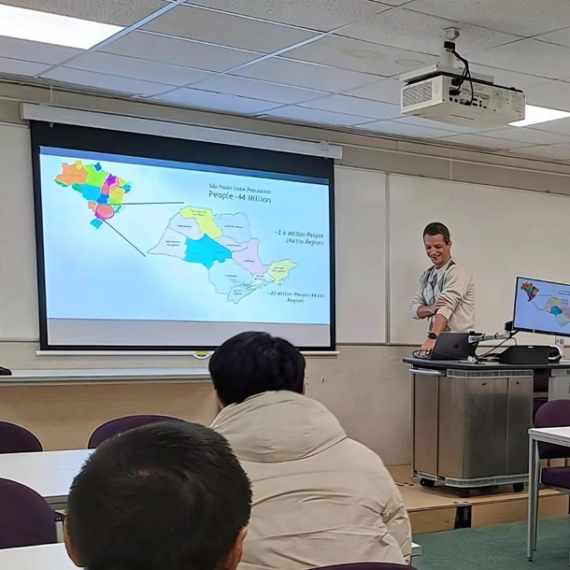
Between February 12th and 24th, 2025, Prof. Luiz Bittencourt (Unicamp/Smartness2030 Researcher) participated in a technical visit to the University of Manchester to strengthen international partnerships and advanced research on Digital Twins. The mission took place within the scope of the FAPESP-SPRINT project, focusing on scalable and efficient computational models. The agenda included in-depth discussions on collaborative research opportunities and joint publications.

SMARTNESS announces three new MSc defenses! The presented research addresses key challenges in networking, including optimizing cloud-native communications with eBPF, integrating Time-Sensitive Networking (TSN) with 5G for industrial applications, and enhancing security in programmable networks through scalable compliance verification.