logo1
logo-w
  • Home
  • About
    • People
    • Use Cases
  • Research
    • Vision
    • Research Strands
    • Scientific and Technological Advancements
  • Dissemination
    • Publications
    • Software
    • Presentations
    • Videos
    • Events
    • Scientific Reports
  • Opportunities
  • News
    • Newsletters
    • In the Media
  • Contact
  • Home
  • About
    • People
    • Use Cases
  • Research
    • Vision
    • Research Strands
    • Scientific and Technological Advancements
  • Dissemination
    • Publications
    • Software
    • Presentations
    • Videos
    • Events
    • Scientific Reports
  • Opportunities
  • News
    • Newsletters
    • In the Media
  • Contact
Facebook-f Instagram Linkedin-in Twitter Youtube
  • Home
  • About
    • People
    • Use Cases
  • Research
    • Vision
    • Research Strands
    • Scientific and Technological Advancements
  • Dissemination
    • Publications
    • Software
    • Presentations
    • Videos
    • Events
    • Scientific Reports
  • Opportunities
  • News
    • Newsletters
    • In the Media
  • Contact
  • Home
  • About
    • People
    • Use Cases
  • Research
    • Vision
    • Research Strands
    • Scientific and Technological Advancements
  • Dissemination
    • Publications
    • Software
    • Presentations
    • Videos
    • Events
    • Scientific Reports
  • Opportunities
  • News
    • Newsletters
    • In the Media
  • Contact
Facebook-f Instagram Linkedin-in Twitter Youtube

News

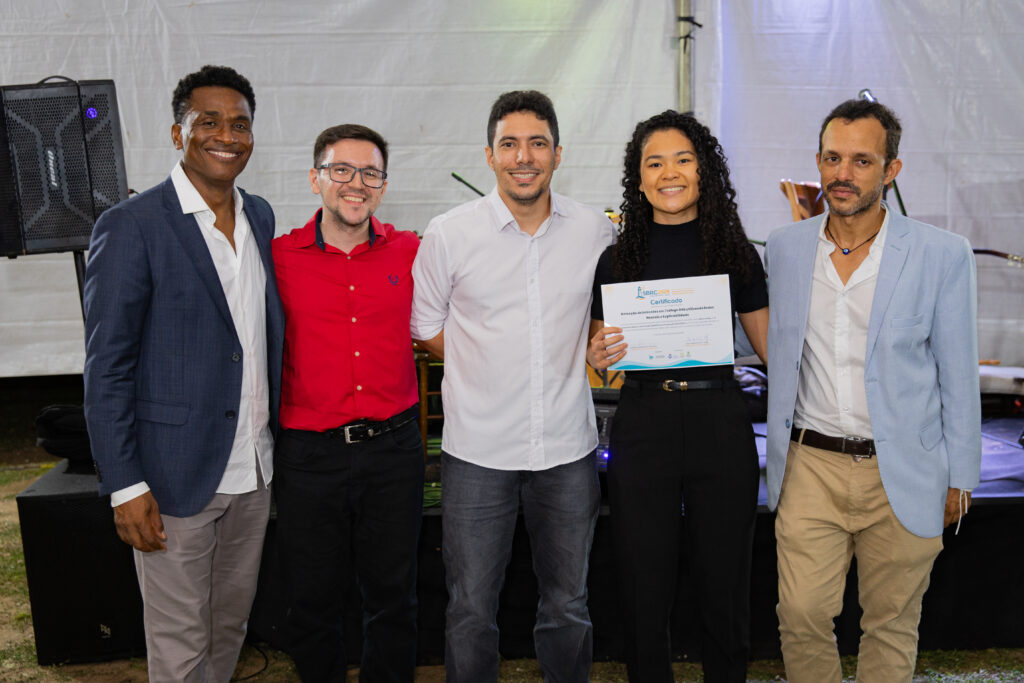
SMARTNESS Researcher Receives Best Paper Award at SBRC 2026

Researcher Giovanna Luisa Hirata dos Anjos, a member of SMARTNESS, received the Best Paper Award at the Undergraduate and Scientific Initiation Workshop held during the Brazilian Symposium on Computer Networks and Distributed Systems (SBRC) 2026.

The award-winning paper, entitled “Intrusion Detection in DNS Traffic Using Neural Networks and Explainability,” proposes an intrusion detection system for DNS traffic capable of identifying threats such as malware, phishing, and spam using neural networks.

According to the researcher, the study’s main scientific contribution was the auditing of the model through explainability techniques using SHAP. This approach made it possible to detect and eliminate a hidden bias in the dataset. After correcting this structural flaw, the model was able to identify attacks based on their actual behavioral and lexical characteristics.

The results demonstrated robust performance, achieving an average F1-score of 0.95 for legitimate traffic and 0.82 for malicious traffic. To ensure reproducibility, all project code was made publicly available as open-source software.

The recognition received at SBRC 2026 highlights the relevance of the research and its potential contribution to the development of artificial intelligence-based cybersecurity solutions.

  • 15/06/2026
  • News

Share this post

Latest posts

Loading...
Young Inventors on a Mission: SMARTNESS Engages Teenagers in Science, Robotics, and 6G Technologies
SMARTNESS Expands International Collaboration Through NOMS 2026 and Ghent University Visit
SMARTNESS at SBRC 2026: AI, 5G, Cybersecurity, and Future Technologies
SMARTNESS Hosts Delegation from the Embassy of Sweden
SMARTNESS Year 3 Workshop brings together experts and highlights advances in artificial intelligence and next-generation networks
SMARTNESS Welcomes FIIS-UNI Delegation from Peru
1 2 … 19 Next »
logo1
  • Home
  • About
  • Vision
  • Use Cases
  • Research Strands
  • Scientific and Technological Advancements
  • People
  • Opportunities
  • News
  • Contact
  • Home
  • About
  • Vision
  • Use Cases
  • Research Strands
  • Scientific and Technological Advancements
  • People
  • Opportunities
  • News
  • Contact
Facebook-f Instagram Linkedin-in Twitter Youtube

Partnerships

fapesp-300x83
ERI_vertical_RGB-3-300x263
unicamp-300x300
usp-2
Logomarca_UFSCAR-2-300x219

© 2024 SMARTNESS 2030